When you’re searching for a reliable local service provider, whether it’s a plumber, house cleaner, landscaper, or contractor, online reviews are often your first stop. But not all reviews are created equal. With the rise of digital marketing and online platforms, fake reviews have become a widespread issue, misleading homeowners into hiring unqualified or even fraudulent businesses.
In this article, we’ll show you how to spot fake reviews and offer practical tips to ensure you hire a trusted local provider you can rely on.
Why Fake Reviews Are a Growing Problem
According to recent studies, up to 30% of online reviews may be fake or misleading, especially on third-party platforms. These reviews are often written:
- By the business owner (or their friends)
- By paid agencies or bots
- To damage competitors’ reputations
For homeowners or business managers, falling for fake reviews can lead to poor service, wasted money, or even property damage.
Red Flags That May Indicate a Fake Review
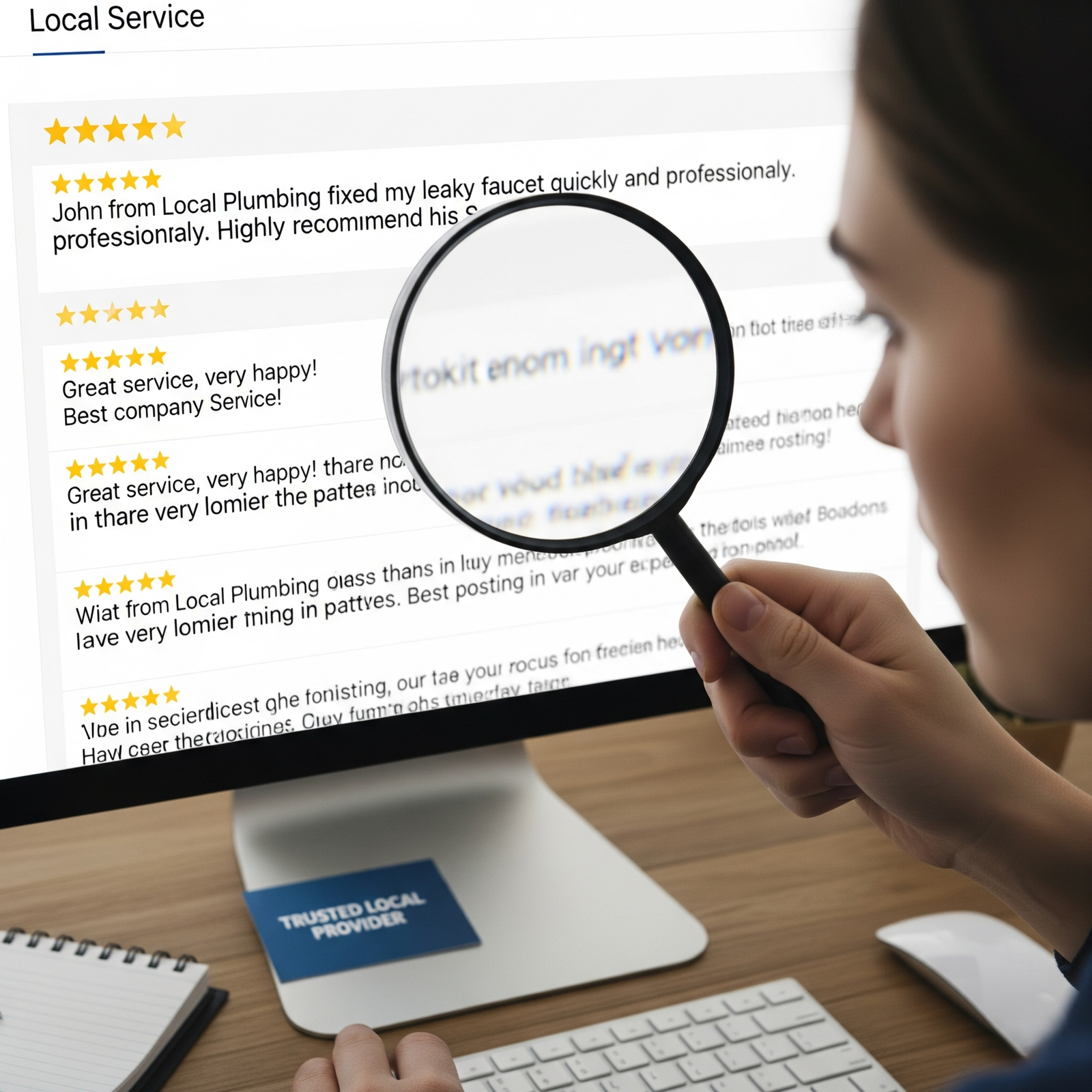
1. Overly Generic or Repetitive Language
Fake reviews often sound unnatural or repetitive. Watch out for:
- Vague phrases like “great service” or “excellent work” with no specifics
- Repeated wording across multiple reviews
- Lack of detail on the service provided
Real customers usually mention specific problems, locations, or interactions.
2. Too Many 5-Star Reviews All at Once
If a business suddenly has a wave of glowing 5-star reviews in a short period, that’s a red flag, especially if they have very few or no older reviews. Genuine customer feedback usually builds gradually over time.
3. Reviewer Profiles Look Suspicious
Click on the reviewer’s name:
- Do they have other reviews, or is it their only one?
- Are they reviewing unrelated businesses in faraway cities?
- Is the name generic, like “John Smith” with no profile picture?
Legit reviewers often have a review history, local references, or photos.
4. Extreme Emotional Language (Positive or Negative)
Fake reviews often sound too good or too bad to be true. Words like “amazing,” “life-changing,” or “worst experience ever” without context can be suspect.
Look for balanced reviews that mention both pros and cons.
5. Reviews Are on Unknown or Untrusted Platforms
Stick to reputable sites like:
- Google Reviews
- Yelp
- Better Business Bureau (BBB)
- Angi
- HomeAdvisor
- Facebook local pages
Avoid sketchy review sites that don’t verify real users.
How to Find a Trusted Local Provider Instead

1. Ask for Referrals from Neighbors or Friends
Word-of-mouth remains one of the most trustworthy ways to find good service providers. Local community Facebook groups, Nextdoor, and HOA forums are great sources of firsthand feedback.
2. Check for Licensing, Insurance & Certifications
Trusted local providers will proudly display:
- Business licenses
- Liability insurance
- Certifications (e.g., HVAC, plumbing, pest control, etc.)
You can verify this by visiting their website or contacting them directly.
3. Look for Photos, Portfolios, and Before & Afters
A reliable provider will usually showcase:
- Job site photos
- Equipment in use
- Before-and-after images
- Branded uniforms or vehicles
Visuals build trust and show real proof of their work.
4. Read Reviews on Multiple Platforms
Don’t rely on one source. Cross-reference reviews on:
- Angi
- Yelp
- BBB
Look for consistency in quality and customer service across platforms.
5. Talk to the Provider Directly
Give them a call or meet in person. Ask questions like:
- How long have you been in business locally?
- Can you provide references or testimonials?
- Do you offer warranties or satisfaction guarantees?
Genuine providers will welcome your questions and answer confidently.
6. Check for Online Presence and Local Recognition
A strong digital presence (updated website, active social media) and local awards, sponsorships, or press mentions can indicate that a provider is well-established and invested in the community.
7. Beware of Extremely Low Quotes
If a provider gives you a price that’s far below market rate, it might be too good to be true. Some scammers use fake reviews and lowball quotes to get jobs and disappear, or deliver subpar results.
Always get multiple quotes and compare quality, not just price.
Bonus: Tools to Detect Fake Reviews
Use tools like:
- Fakespot or ReviewMeta – analyze product/business reviews for authenticity
- BBB Scam Tracker – see if the business has complaints
- Google Transparency Tools – report and filter suspicious reviews
Final Thoughts
Online reviews can be incredibly helpful, but only if you know how to separate the real from the fake. By recognizing the signs of manipulated feedback and following smart research strategies, you’ll be far more likely to hire a reliable, experienced, and honest local provider.
Protect your investment and peace of mind by doing your homework. Your home and wallet will thank you.





No Comments